
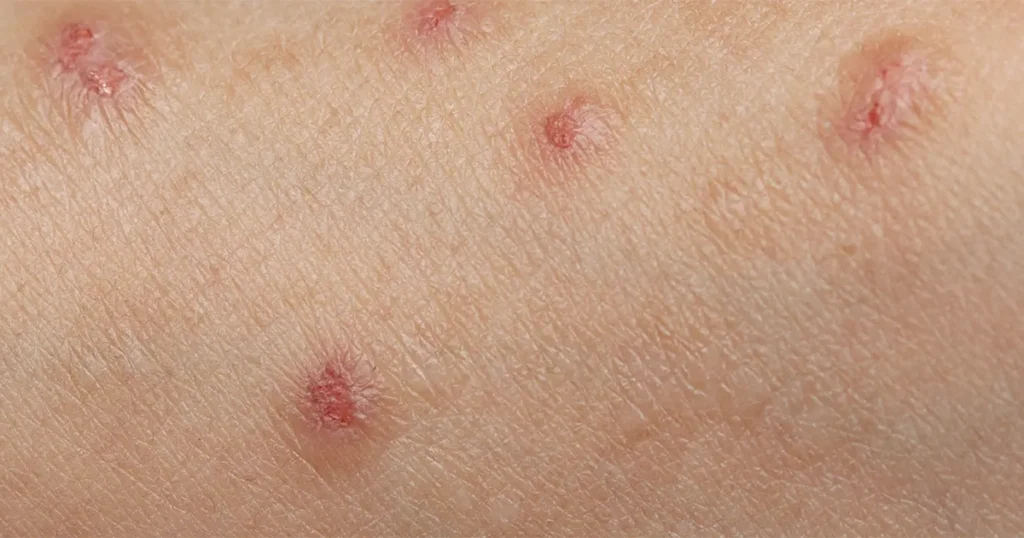
A lesion is any abnormal change in tissue structure caused by injury, disease, infection, or other pathological processes. Understanding What Is A Lesion helps people recognize changes in their bodies early and seek appropriate care. These changes can occur on the skin, in organs, or deep inside the body, such as a lesion on the brain, and they vary widely in severity and cause.
Lesions may be simple and harmless, like benign growth, or more serious, like benign skin cancer or dangerous lesions that require urgent attention. When people notice unusual changes, especially if they are painful, growing, or bleeding, prompt evaluation in our emergency room or by a dermatologist can be crucial.
What Are Lesions On Skin?
Lesions on skin are areas where the skin looks or feels different from its surroundings, such as bumps, patches, ulcers, or discolored spots, and represent abnormal tissue changes. These changes can result from irritation, infection, immune reactions, or chronic conditions. Skin lesions may be primary skin lesions, appearing first in a disease process, or secondary skin changes that evolve later due to trauma or progression.
A retrospective analysis found that about 14.8% of outpatient dermatology cases involved skin lesions, with infectious causes accounting for the majority. This highlights how common skin lesions are in clinical practice.
Symptoms Of Lesions
- Change in color, size, or shape of a skin area.
- Pain, tenderness, or itching.
- Redness, swelling, or warmth around the lesion.
- Ulceration or open sore that does not heal.
- Bleeding or discharge from the lesion.
Classification Of Skin Lesions
Skin lesions are classified into primary and secondary lesions, which help doctors understand their origin and progression.
Primary Skin Lesions
Primary skin lesions are the first visible signs of a disease appearing on the skin. They arise directly from the pathological process and are not caused by trauma or secondary changes.
- Macule: Flat, discolored spot on the skin, usually less than 1 cm, without elevation or depression. Examples include freckles and certain birthmarks.
- Papule: Small, raised, solid bump usually less than 1 cm, often seen in acne or papular rashes.
- Nodule: Larger, firm, solid bump extending into deeper skin layers, sometimes representing a benign lesion like a lipoma.
- Vesicle: Small, fluid-filled blister, often caused by infections or allergic reactions.
- Bulla: Larger fluid-filled blister greater than 1 cm may form from burns or autoimmune conditions.
- Pustule: Raised lesion filled with pus, commonly seen in infections or acne.
Secondary Skin Lesions
Secondary skin lesions are changes that occur to primary lesions over time. They result from scratching, infection, healing, or disease progression, and often indicate the evolution of a skin condition.
- Crust: Dried exudate, blood, or pus on top of a primary lesion, often from scratching or rupture.
- Scale: Flaking or shedding of the outer layer of the skin, commonly seen in eczema or psoriasis.
- Fissure: Deep crack or split in the skin (skin fissure) caused by dryness, trauma, or disease.
- Erosion: Superficial loss of the top layer of skin (skin erosion), usually following rupture of a vesicle or pustule.
- Ulcer: Deeper loss of skin tissue, may bleed or form scar, often from chronic progression of a primary lesion.
- Excoriation: Linear scratch marks from rubbing or scratching primary lesions.
What Causes Lesions?
Lesions arise from many underlying factors, including injury, infection, immune reactions, and abnormal tissue growth. Recognizing the cause helps guide treatment and prognosis.
- Infection: Bacteria, viruses, or fungi can invade skin tissue, leading to redness, pustules, or ulcers. Viral infections like herpes or chickenpox often cause distinctive lesions.
- Trauma: Cuts, friction, or burns damage skin cells and can produce secondary lesions such as skin fissures or scars.
- Immune‑Mediated Conditions: Inflammatory diseases like eczema or psoriasis prompt immune reactions that alter normal skin appearance.
- Abnormal Growth: Benign or malignant growths, such as lipomas or benign skin cancer, can form abnormal tissue masses.
- Genetic Or Systemic Diseases: Some conditions, like tuberous sclerosis, may manifest with characteristic skin lesions.
Diagnosis Of Skin Lesions
Accurate diagnosis is essential in determining whether a lesion is harmless or dangerous. Clinical evaluation often involves careful inspection and specialized tests.
- Visual Examination: A clinician inspects size, shape, color, and texture of lesions to guide further evaluation.
- Dermoscopy: A hand‑held magnifier that helps visualize underlying skin structures more clearly.
- Biopsy: Removal of a sample for microscopic analysis to rule out malignant changes.
- Imaging: Ultrasound or MRI may be used for deeper or ambiguous lesions, such as a lesion on brain or deep tissue.
- Laboratory Tests: Blood tests or cultures may identify infection or systemic causes.
When Skin Lesions Are An Emergency
While most skin lesions are harmless, some changes can indicate serious or life-threatening conditions. Recognizing these warning signs early is crucial to prevent complications and ensure timely treatment. Prompt medical evaluation is recommended when lesions show sudden changes, severe pain, or systemic symptoms.
- Rapidly growing or changing lesions.
- Bleeding or oozing that does not stop.
- Severe pain or tenderness around the lesion.
- Redness, swelling, or warmth spreading from the lesion.
- Fever or signs of infection accompanying the lesion.
- Lesions on sensitive areas like the face, eyes, or mucous membranes.
If you notice any of these symptoms, contact the St. Michael’s Elite Hospital immediately for expert evaluation and care.
Treatments For Lesions
Treatment depends on lesion type and cause, and ranges from home care to surgical procedures.
- Topical Therapies: Over‑the-counter creams or ointments can help reduce inflammation, infection, or itch.
- Antibiotics/Antifungals: Used when bacterial or fungal infection is the cause.
- Cryotherapy: Freezing off certain benign lesions like warts.
- Excision: Surgical removal for benign growths or suspicious lesions.
- Systemic Medications: Steroids or immunosuppressants for immune‑mediated skin diseases.
- Monitoring: Some lesions, like benign nevi, are observed for changes over time rather than treated immediately.
St. Michael’s Elite Hospital – Care For Skin Lesions
If you notice unusual changes in your skin or body and wonder, “What Is A Lesion?” The specialists at St. Michael’s Elite Hospital are here to help. Our experienced dermatology team provides thorough evaluations to determine whether lesions are harmless, require monitoring, or need urgent treatment. Early assessment can prevent complications and provide peace of mind.
At St. Michael’s Elite Hospital, we offer personalized care for all types of lesions, including primary skin lesions, secondary skin changes, and potentially dangerous lesions. From accurate diagnosis to advanced treatments, our team ensures that every patient receives effective, compassionate care to maintain healthy skin and overall well-being.