

Allergies occur when the immune system mistakenly identifies a normally harmless substance as a threat and overreacts to it. According to the Asthma and Allergy Foundation of America (AAFA), allergies are among the most common chronic conditions in the United States, affecting millions of children and adults each year.
Whether your symptoms are seasonal or occur year-round, understanding the cause of your allergies is the first step toward finding relief. If symptoms become severe or interfere with daily life, seeking care at Sugar Land Hospital can help you get a proper diagnosis and treatment plan.
What Are Allergies?
Allergies are immune system reactions to substances that are usually harmless to most people. These substances, known as allergens, can include pollen, dust mites, mold, pet dander, foods, medications, and insect stings.
When a person with allergies encounters an allergen, the immune system produces antibodies called immunoglobulin E (IgE). These antibodies trigger the release of chemicals such as histamine, leading to symptoms like sneezing, itching, congestion, watery eyes, skin rashes, and swelling.
The National Institute of Allergy and Infectious Diseases (NIAID) explains that allergic reactions can range from mild discomfort to life-threatening emergencies such as anaphylaxis.
Read more: Can Allergies Cause Sore Throat
Causes of Allergies
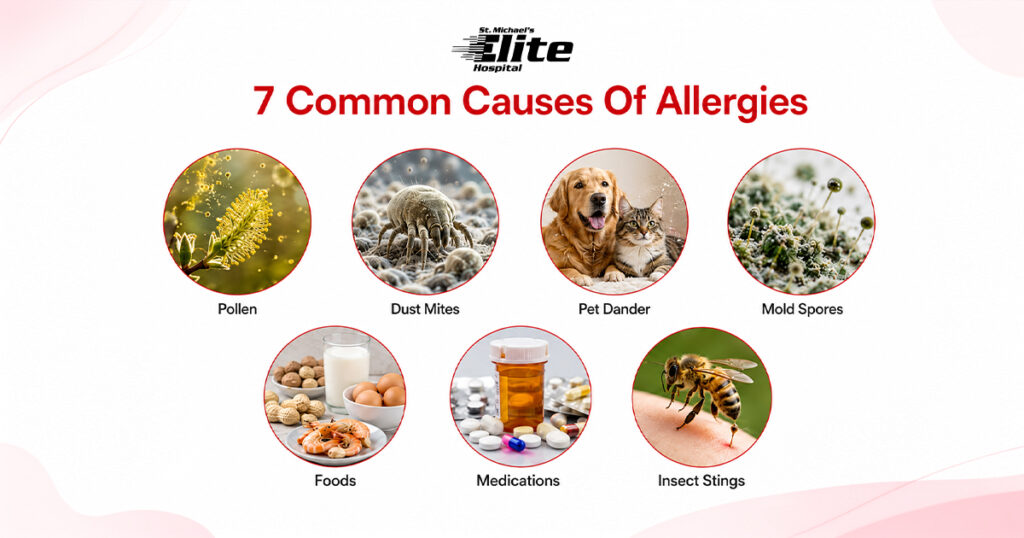
There is no single cause of allergies. Most experts believe allergies develop because of a combination of genetics, environmental exposures, and immune system responses.
1. Pollen
Pollen is one of the most common causes of allergies in Texas and across the United States. Trees, grasses, and weeds release tiny pollen particles into the air that can enter the nose, eyes, and lungs. When a person with pollen allergies inhales these particles, the immune system triggers inflammation, leading to symptoms such as sneezing, congestion, itchy eyes, and a runny nose. Seasonal symptoms often worsen during periods of high pollen counts.
Read more: Is Hay Fever Contagious
2. Dust Mites
Dust mites are microscopic organisms that thrive in warm, humid environments and feed on dead skin cells. They commonly live in mattresses, pillows, carpets, upholstered furniture, and bedding. Their waste products and body fragments contain proteins that can trigger allergic reactions when inhaled. People with dust mite allergies often experience year-round symptoms, including nasal congestion, sneezing, coughing, and postnasal drip.
3. Pet Dander
Pet allergies are usually caused by proteins found in an animal’s skin flakes (dander), saliva, and urine rather than its fur. Cats and dogs are the most common triggers, but birds, rabbits, and other pets can also cause reactions. Exposure can lead to sneezing, itchy eyes, nasal congestion, coughing, and wheezing. Symptoms may develop immediately or several hours after contact with the animal.
4. Mold Spores
Mold grows in damp areas such as bathrooms, kitchens, basements, crawl spaces, and water-damaged buildings. As mold grows, it releases microscopic spores into the air that can be inhaled. For people with mold allergies, exposure can trigger sneezing, congestion, coughing, itchy eyes, and sinus pressure. Mold exposure may also worsen asthma symptoms in sensitive individuals.
5. Foods, Medications, and Insect Stings
Some allergies occur when the immune system reacts to specific foods, medications, or insect venom. Common food allergens include peanuts, tree nuts, milk, eggs, wheat, soy, fish, and shellfish. Certain antibiotics, pain relievers, and other medications can also trigger allergic reactions, while bee, wasp, hornet, and fire ant stings may cause severe symptoms. Reactions can range from mild itching and hives to life-threatening anaphylaxis that requires immediate medical attention.
Can You Develop Allergies Later in Life?
Yes. Many people assume allergies only develop during childhood, but adults can develop allergies at any age.
Research published by the American College of Allergy, Asthma & Immunology (ACAAI) shows that adult-onset allergies are relatively common and can appear even after years of exposure without symptoms.
Several factors may contribute to new allergies in adulthood:
- Moving to a new geographic region
- Increased allergen exposure
- Hormonal changes
- Environmental changes
- Immune system changes associated with aging
This is why someone who never experienced seasonal allergies before may suddenly develop symptoms later in life.
How Do People Get Allergies?
Allergies develop through a process called sensitization. During initial exposure to an allergen, the immune system identifies the substance as harmful and creates IgE antibodies. At this stage, a person may not experience symptoms. Future exposure activates these antibodies, causing the release of histamine and other inflammatory chemicals that trigger allergy symptoms.
The Sensitization Process
The sensitization process may take weeks, months, or even years. Repeated exposure can gradually increase the immune system’s sensitivity until symptoms eventually appear. This explains why allergies can develop unexpectedly after years of tolerance.
Risk Factors
Several factors increase the likelihood of developing allergies:
- Family history of allergies
- Asthma
- Eczema
- Childhood exposure patterns
- Environmental pollution
- Tobacco smoke exposure
According to the CDC, children with a family history of allergic diseases are more likely to develop allergies themselves.
What Are the Symptoms of Allergies?
Allergy symptoms occur when the immune system releases chemicals such as histamine in response to an allergen. The type and severity of symptoms can vary depending on the trigger, the amount of exposure, and the individual’s sensitivity. Symptoms may affect the respiratory system, skin, digestive system, or multiple areas of the body at the same time.
Common symptoms include:
- Sneezing
- Runny nose
- Nasal congestion
- Itchy eyes
- Watery eyes
- Itchy skin
- Skin rashes
- Hives
- Coughing
- Wheezing
Can Allergies Be Prevented?
Allergies cannot always be prevented, especially when genetics plays a role. However, reducing exposure to known allergens can significantly lower the frequency and severity of symptoms. Identifying your triggers and making simple environmental changes can help you better manage allergies and improve your quality of life.
Helpful prevention measures include:
- Monitoring local pollen forecasts
- Keeping windows closed during high-pollen days
- Using HEPA air filters
- Controlling indoor humidity
- Washing bedding weekly in hot water
- Avoiding known allergens
- Regular home cleaning
Can Allergies Go Away on Their Own?
Yes, some allergies may go away over time, while others can last for years or even a lifetime. Children often outgrow allergies to milk and eggs, but allergies to peanuts, tree nuts, fish, and shellfish are more likely to continue into adulthood.
Environmental allergies can also change with age. Some people experience fewer symptoms over time, while others develop new allergies later in life. If symptoms continue or affect your daily routine, seeking allergy treatment near me can help you find the right diagnosis and treatment options.
How Long Do Allergies Last?
The duration of allergy symptoms depends on the trigger. Seasonal allergies typically last as long as the allergen is present in the environment. For example, tree pollen allergies may persist for several weeks during spring. Year-round allergies caused by dust mites, mold, or pet dander may continue indefinitely unless exposure is reduced. Food allergy symptoms usually occur shortly after exposure and may resolve within hours. Severe reactions, however, require prompt medical treatment.
If symptoms persist or worsen, seeking evaluation at a hospital near me can help determine the underlying cause and appropriate treatment.
How to Treat Allergies
The best allergy treatment depends on the trigger, severity of symptoms, and how often symptoms occur. Treatment typically focuses on relieving symptoms, reducing exposure to allergens, and preventing future allergic reactions. Your healthcare provider may recommend one or more of the following options.
- Over-the-Counter Allergy Medications: Antihistamines, nasal corticosteroid sprays, decongestants, and allergy eye drops can help manage common symptoms such as sneezing, itching, congestion, and watery eyes. These medications are often the first line of treatment for mild to moderate allergies.
- Allergy Shots and Immunotherapy: Allergy shots and sublingual immunotherapy gradually expose the immune system to small amounts of allergens over time. This treatment can reduce sensitivity to triggers and provide long-term symptom relief for certain allergies.
- Lifestyle Changes: Avoiding known allergens, showering after outdoor activities, using allergen-proof bedding, and improving indoor air quality can help minimize exposure to allergy triggers. These preventive measures often work best when combined with medical treatment.
Allergies in Kids
Children commonly develop allergies during infancy and early childhood. Environmental allergens, foods, and eczema-related allergies are particularly common among younger children. According to the CDC, approximately 1 in 4 U.S. children has a seasonal allergy, eczema, or food allergy, highlighting the significant impact allergic conditions have on pediatric health.
Allergy Medicine for Kids
- Pediatric antihistamines to help relieve sneezing, itching, a runny nose, and watery eyes.
- Nasal corticosteroid sprays to reduce nasal inflammation and congestion caused by allergies.
- Saline nasal sprays or rinses to clear allergens from the nasal passages and ease congestion naturally.
- Allergy eye drops to reduce itchy, red, and watery eyes associated with allergic reactions.
- Allergy testing to identify specific triggers and guide a personalized treatment plan.
- Immunotherapy (allergy shots or tablets) when appropriate for children with persistent or severe allergies.
When to Go to the ER
Most allergy symptoms are manageable, but some reactions require immediate emergency care. Seek emergency medical attention if you experience:
- Difficulty breathing
- Wheezing that worsens rapidly
- Swelling of the lips, tongue, or throat
- Severe hives covering large areas of the body
- Dizziness or fainting
- Rapid drop in blood pressure
These symptoms may be signs of anaphylaxis, a life-threatening allergic reaction that requires immediate treatment with epinephrine and emergency care.
If you notice any of these warning signs, do not delay seeking help. Checking local ER wait times may help you understand how quickly you can be seen, but severe allergic reactions should always be treated as medical emergencies. At our hospital in Sugar Land, our ER wait time is typically less than 10 minutes, allowing patients to receive timely evaluation and treatment when every second counts.
Get Allergy Care at St. Michael’s Elite Hospital
Understanding what causes allergies can help you recognize triggers, manage symptoms, and seek appropriate treatment before complications develop. Allergies often result from a combination of genetics, environmental exposures, and immune system responses, and they can develop at any stage of life.
If you are experiencing persistent allergy symptoms, severe reactions, or need professional testing, St. Michael’s Elite Hospital is here to help. As a CIHQ-accredited hospital in Sugar Land, Texas, the experienced medical team provides comprehensive evaluation and treatment for allergy-related concerns. Learn more about available services by visiting the website and get the care you need to breathe easier and feel better.
Key Takeaways
- Allergies happen when the immune system reacts to harmless substances like pollen, dust, or food.
- Genetics, environment, and immune sensitivity all play a role in allergy development.
- Allergies can start in childhood or appear later in adulthood.
- Common symptoms include sneezing, congestion, itchy eyes, skin reactions, and wheezing.
- Triggers include pollen, dust mites, pet dander, mold, foods, medications, and insect stings.
- Avoiding allergens can help reduce symptoms but may not fully prevent allergies.
- Some allergies improve over time, while others persist long-term.
- Treatments include medications, immunotherapy, and lifestyle changes.
- Severe reactions like anaphylaxis need emergency care immediately.
- Proper diagnosis helps manage symptoms and improve quality of life.
H2:FAQs
Can Allergies Cause Fever?
No, allergies do not cause fever. Fever usually suggests an infection like a cold or flu, not an allergic reaction.
Can Allergies Cause A Sore Throat?
Yes, allergies can cause a sore throat due to postnasal drip, where mucus irritates the throat.
Are Allergies Genetic?
Yes, allergies often run in families. Having parents with allergies increases your risk of developing them.
Can Allergies Make You Cough?
Yes, allergies can cause coughing when postnasal drip or airway irritation triggers the cough reflex.