

Waking up with a persistent cough, chest tightness, and unusual fatigue can feel worrying, especially when you do not “look sick” or have a high temperature. Many people assume that serious lung infections always come with obvious signs like fever. However, Can You Have Pneumonia Without a Fever? is a question doctors hear often and the answer is yes.
This is what makes the condition more dangerous. A lack of fever does not mean the infection is mild or harmless. Pneumonia without fever can still worsen quickly, causing breathing difficulty, low oxygen levels, chest pain, and severe weakness, so delays in care increase risk. If symptoms become severe, seeking immediate evaluation at hospitals in Sugar Land, TX can help ensure timely diagnosis and treatment.
What Is Pneumonia?
Pneumonia is an infection of the lungs that inflames the air sacs (alveoli), which may fill with fluid or pus, making breathing difficult. It can be caused by bacteria, viruses, or fungi and may affect one or both lungs. According to the NIH (National Heart, Lung, and Blood Institute), pneumonia can range from mild to life-threatening depending on age and health status. (nhlbi.nih.gov)
A large epidemiological review published in NCBI reports that community-acquired pneumonia affects approximately 0.5% to 1% of adults each year, with a significant portion requiring hospital admission due to complications.
Dangerous Symptoms of Pneumonia
- Persistent cough with mucus or phlegm.
- Shortness of breath or difficulty breathing.
- Chest pain that worsens when breathing or coughing.
- High fever or chills in many cases.
- Extreme fatigue or sudden weakness.
- Confusion or altered mental state, especially in older adults.
- Rapid heartbeat or rapid breathing.
A respiratory pathogen panel test can help identify the virus or bacteria causing respiratory symptoms, allowing healthcare providers to choose the most appropriate treatment plan.
Also read: Is Pneumonia Contagious?
Can Pneumonia Occur Without Fever?
Yes, pneumonia can occur without fever. This is known as afebrile pneumonia, and it is more common than many people realize. In some cases, the immune system does not produce a strong fever response, especially in older adults, infants, or people with weakened immunity. Because of this, the infection can still be active in the lungs while typical warning signs like fever are missing.
This can make diagnosis more difficult, leading to delayed treatment and a higher risk of complications if symptoms are ignored.
Who Is More Likely To Have Pneumonia Without Fever
- Older adults, especially those over 65 years of age.
- People with weakened immune systems, such as diabetes or cancer patients.
- Infants and young children.
- Patients taking medications that suppress immune response, like steroids.
- Individuals with chronic illnesses such as COPD or heart disease.
If you notice any of these symptoms or risk factors, it is important to seek medical evaluation promptly. For timely diagnosis and care, hospitals in Sugar Land, TX can provide immediate medical support.
What Are the Symptoms of Pneumonia Without Fever?
Pneumonia without fever can be harder to detect because the typical warning sign of high temperature is absent. Instead, symptoms may appear mild at first and are often mistaken for fatigue or a common chest infection. However, the infection can still affect lung function and oxygen levels, making early recognition important to avoid complications.
- Persistent cough, which may be dry or produce mucus.
- Shortness of breath, especially during light activity or rest.
- Chest discomfort or pain that worsens with breathing or coughing.
- Unexplained fatigue or feeling unusually weak.
- Rapid breathing or mild breathlessness at rest.
- Confusion or difficulty concentrating, especially in older adults.
- Reduced appetite or general feeling of illness.
If your loved ones are experiencing these symptoms, it is important to seek immediate medical attention at an emergency room near me for prompt evaluation and treatment.
Does Pneumonia Cause Fever?
Yes, pneumonia commonly causes fever as the body’s immune system responds to the lung infection. Fever is one of the most frequent symptoms, especially in bacterial pneumonia, and is often accompanied by chills and sweating. However, not every patient develops a fever, particularly older adults or those with weakened immune systems.
In some cases, pneumonia can occur without fever, which can delay diagnosis and treatment because other symptoms may seem mild or unrelated at first.
How is Pneumonia Diagnosed?
Pneumonia is diagnosed through symptoms, physical examination, and tests that confirm infection in the lungs. Doctors may use imaging and lab tests to identify the cause and severity, to detect the responsible virus or bacteria.
- Medical history and symptom check (cough, fever, breathing difficulty)
- Physical exam (lung sounds like crackles or reduced airflow)
- Chest X-ray to confirm lung infection
- Blood tests for infection markers
- Sputum test to identify bacteria or viruses
- Respiratory pathogen panel test for detecting specific pathogens
- Pulse oximetry to check oxygen levels
When to Go to the ER
You should go to the ER if pneumonia symptoms become severe or show signs of rapid worsening, even if you do not have a fever. Pneumonia can affect oxygen levels and lung function quickly, especially in older adults or people with underlying health conditions. Immediate medical attention is important to prevent serious complications.
- Severe shortness of breath or difficulty breathing.
- Chest pain that is constant or worsening.
- Confusion, dizziness, or sudden mental changes.
- Blue lips or fingertips (signs of low oxygen).
- Rapid heartbeat or very fast breathing.
- Coughing up blood or thick, worsening mucus.
- Extreme weakness or inability to perform daily activities.
A 24/7 emergency room can provide rapid evaluation, oxygen support, diagnostic testing, and emergency treatment when these warning signs develop.
How to Treat Pneumonia?
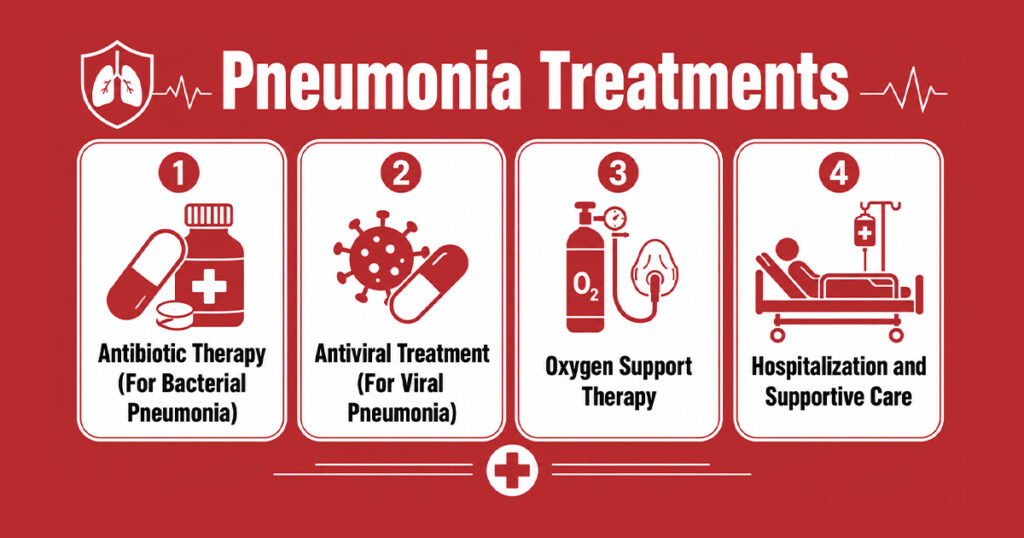
Treating pneumonia depends on its cause, severity, and the patient’s overall health condition. Most cases improve with timely medical care, but delaying treatment can lead to serious complications affecting breathing and oxygen levels. Doctors first identify whether the infection is bacterial, viral, or fungal before planning management. Early diagnosis and proper monitoring play a key role in recovery and reducing hospital risk.
Antibiotic Therapy (For Bacterial Pneumonia)
Antibiotics are the main treatment for bacterial pneumonia and are prescribed by a doctor based on the suspected or confirmed bacteria. These medicines help stop the infection from spreading and allow the lungs to recover gradually. It is very important to complete the full course even if symptoms improve early.
Antiviral Treatment (For Viral Pneumonia)
Viral pneumonia does not always require antibiotics and may be managed with antiviral medicines when recommended by a doctor. These medications are used in specific viral infections such as influenza-related pneumonia. The goal is to reduce viral activity and support the immune system’s response. In many mild cases, recovery depends on the body’s natural healing process under medical supervision.
Oxygen Support Therapy
In more severe cases, pneumonia can reduce oxygen levels in the blood, making breathing difficult. Oxygen therapy may be provided in hospitals to ensure the body receives adequate oxygen supply. This support helps reduce strain on the lungs and other organs while the infection is being treated. It is closely monitored by healthcare professionals depending on the patient’s condition.
Hospitalization and Supportive Care
Hospitalization may be required for patients with severe symptoms, high risk factors, or complications. Supportive care includes fluids, fever monitoring, and continuous observation of breathing and heart rate. This approach helps stabilize the patient while targeted treatment works on the infection.
Get Expert Care for Pneumonia Symptoms
Understanding pneumonia symptoms early can make a significant difference in preventing complications, especially when fever is not present. Since pneumonia can sometimes develop silently, recognizing warning signs like persistent cough, chest discomfort, or shortness of breath is important.
If you are experiencing ongoing respiratory symptoms or suspect pneumonia, seeking professional care is essential. St. Michael’s Elite Hospital can provide thorough evaluation, confirm the cause of your symptoms, and guide you toward appropriate treatment based on your condition. Getting timely medical attention can help protect your lungs, improve recovery, and reduce the risk of serious complications.
Key Takeaway
- Yes, pneumonia can occur without a fever and may still be serious.
- Common symptoms include cough, fatigue, and difficulty breathing.
- High-risk groups may not show typical fever-related signs.
- The condition can worsen quickly if it is not treated early.
- Severe or worsening symptoms require immediate medical attention.
Frequently Asked Questions
What Can Be Mistaken For Pneumonia?
Pneumonia is often mistaken for the flu, bronchitis, or a common cold due to similar symptoms like cough and fatigue. These conditions overlap in early stages. A medical exam is needed to confirm pneumonia.
What Are The First Warning Signs Of Pneumonia?
Early signs include persistent cough, chest pain, and shortness of breath. Some people may feel tired, weak, or have mild chills. Symptoms usually worsen over time.
How Do You Know If You Have Pneumonia Without A Fever?
Look for ongoing cough, chest discomfort, and breathing difficulty. Fatigue and rapid breathing are also common signs. Diagnosis requires a medical evaluation.